GUPT-20 Click on image fo enlargement.


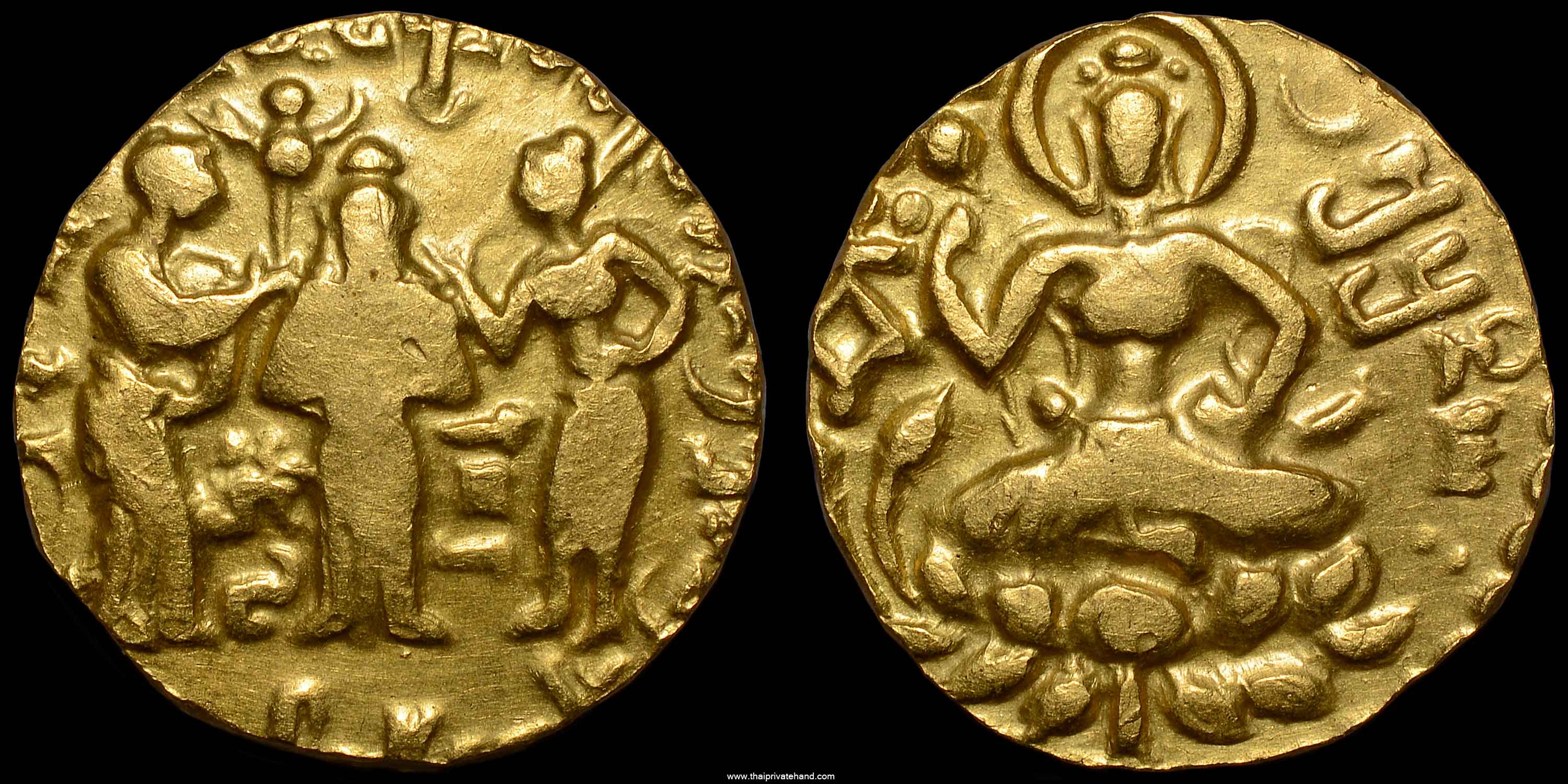
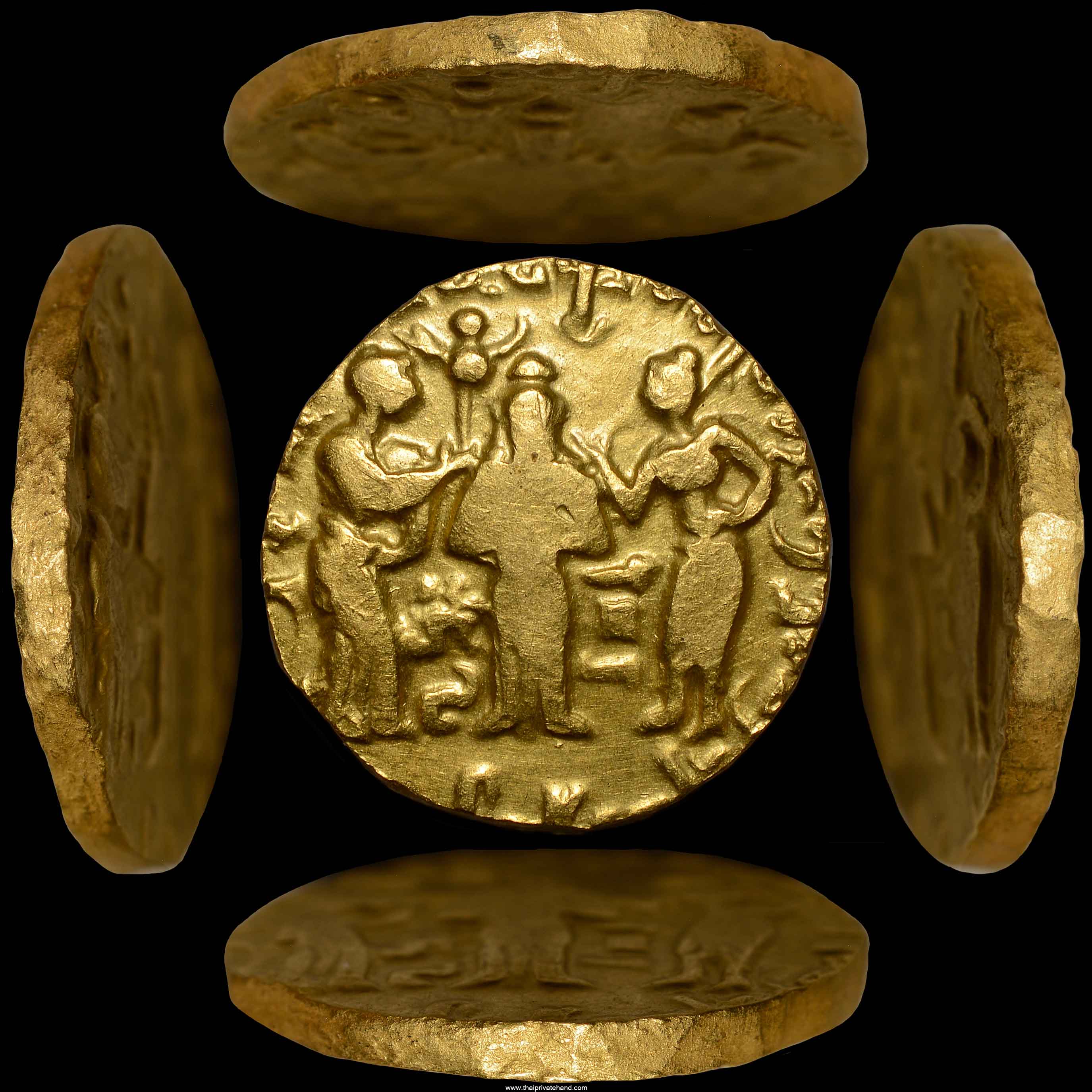
Indian Coins, Gupta. Kumaragupta I , 415-455 AD, Gold Dinar, Apratiga type,
7.74 g. 16.6 mm. die-axis 11 h. Apratiga type.
Obverse: Part of legend around PRATAPA PAR ###...TA SRI#...TA...##KRA...#VI##...VIKRAYA
...##TATRATA...###NATA#TA## in Gupta-Bramhi script. King standing facing, wearing a long robe and
jewelly. Left and right hand are held together at wast height , to the right of the king
KUMARA and to the left GUPTA. The letter is on their side; the word Kumara is read from above, and the word Gupta from below.
In right field a female figure stands facing left, right hand outstretched and left hand on hip.
In left field a male figure stands facing right with right hand outstretched towards the king and left hand
holding a shield in front of the torso. In left field, behind male figure, is a Garuda standard.
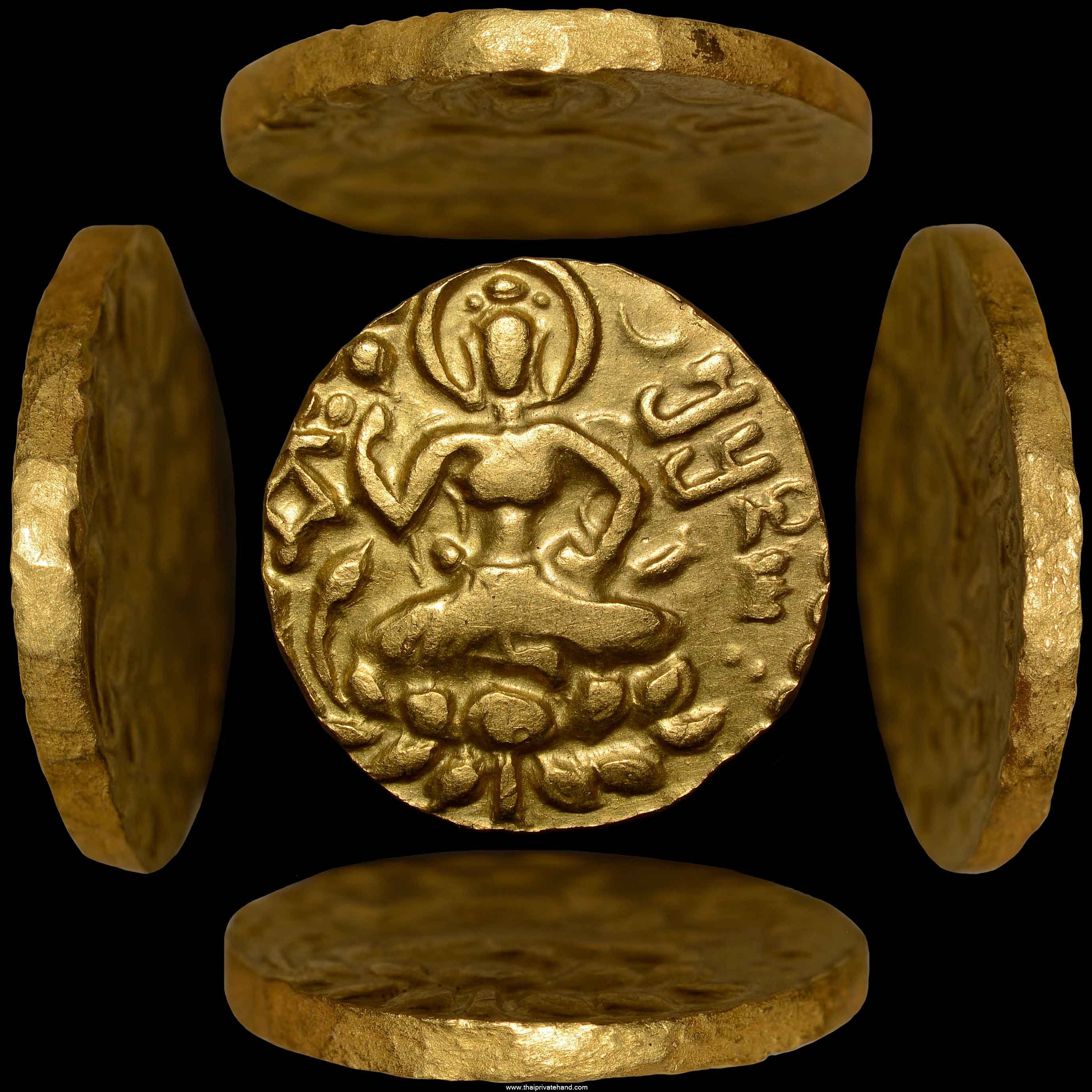
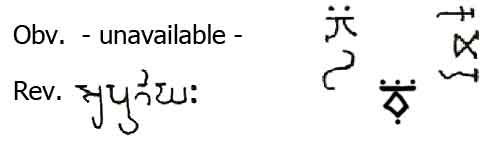
Rsverse: APRATIGHA in Gupta-Bramhi script, invincible.
Goddess Lakshmi seated on lotus facing with halo around head, wearing lower garments, shawl and jewellery.
Right hand is outstretched and holds a lotus, left hand rests on hip, a royal symbol (tamgha) in left field,
in upper-right field a crescent.
An extremely rare genuine gold coin of the Gupta Imperial mint, solid gold coin not a filled metal electrotype / reproduction.
This coin compares to known authentic examples images housed in museums. The obverse and reverse dies matched the specimen in the collection of the National Museum, New Delhi, India. (51.50/49).
Photographic images can provide valuable clue, they can't definitely prove authenticity. For authentication, coins should be confirmed by other tests. Check the weight and size of the coin, microscopic evaluations to determine surface compositions and minting techniques,
spectrometry to analyze the elemental composition of the coin's metal, and employ X-ray imaging to analyze the coin's structure and detect hidden defects, any anomalies.